Nino Negri - Chiuro (SO) article by enocentrico. 
Company visited August 28, 2007.
"Beautiful is going down in the recesses Bacchic
with friends to toast promising
glass with glass face with face
damage to life the most beautiful smile"
September 1936.
So reads a poem by John Bertacchi, poet Chiavenna original, engraved on the door of this prestigious winery. The
be reached along the road that leads to Sondrio Lecco, follow the directions for the first Chiuro and finally to the cellar.
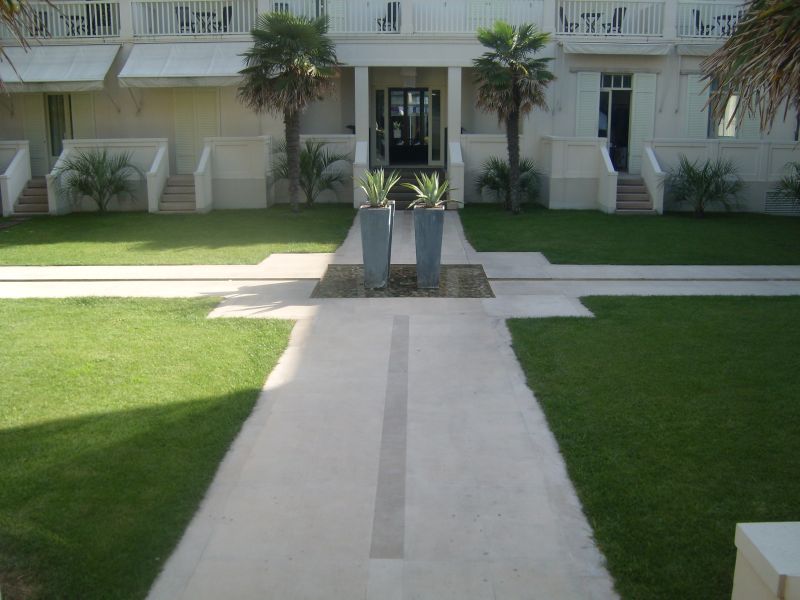
You arrive at the gate of the beautiful building Quadrio, home of the company.
But first review the usual "guidaiolo"
AIS: 5 bunches of the Valtellina Sfursat '03, '03 4 clusters at FRAC, at the Mazer '03, '03 to Tense and The Ca Brione '05.
Espresso: 3 bottles at Sfursat Valtellina DOCG Valtellina Superiore DOCG 2003 and the Vineyard Fracia 2003.
Gambero Rosso 3 glasses at Sfursat Valtellina DOCG 2003 and the Sfursat 5 Stelle 2003.
La storia inizia nel 1897, quando un commerciante all'ingrosso di nome
Nino Negri , nato all'Aprica e figlio di albergatori, fonda l'azienda.
Questo personaggio aveva un innato senso dell'intraprendenza e subito individua nel castello Quadrio, costruito nel 1432 da Filippo Visconti, in onore al condottiero valtellinese Stefano Quadrio, la sede "ideale" per i suoi affari.
Ma l'impulso vero e proprio è stato dato da Carluccio Negri, figlio di Nino, uno dei primi enologi usciti dalla scuola di Conegliano Veneto nel 1920.
Nel corso degli anni, la Nino Negri, ha assorbito due marchi storici: la Pelizzatti e l'Enologica valtellinese raggiungendo così il 30% della produzione of the wine produced throughout the Valtellina.
In 1986, the house wine was acquired by the Italian Group
Wines.
today has to its credit 34.50 acres of property as follows: 4.50
has in Sassella.
11 ha in Hell.
12 ha in Grumello.
7 has the "frac".
This does not, as to be regulated, in sub-areas of Valtellina Superiore, but it is a vineyard of high quality wine growing. The arrival of
IRP, in addition to the support of trade, has given new "lymph" to carry out important work in the vineyard.
First of all you have modified the orientation of some rows che, dall'originario "ritocchino" ovvero da nord a sud, sono stati portati a "giropoggio", ovvero da est a ovest. Tale trasformazione ha portato delle migliorie, prima di tutto ad una più facile gestione del vigneto che così può essere effettuata con l'ausilio di piccoli mezzi cingolati, ma anche benefici nella qualità delle uve che, con il nuovo sesto d'impianto, ha portato ad aumentare la superficie fogliare nonché alla migliore maturazione delle uve.
Sono stati re-impiantati in tutto 10 ha di vigna, con l'ausilio della selezione clonale partendo da una ricerca delle migliori piante di nebbiolo che in Valtellina viene chiamato Chiavennasca.
 Il nebbiolo in Valtellina chiavennasca is called.
 Each year in the cellar, come about
1,100,000 kg of grapes, 30% comes from estate vineyards and the rest from there. V. Ass (Valtellinesi Winegrowers Association), an association founded in 1988 and currently has, to his credit, more than 250 members.
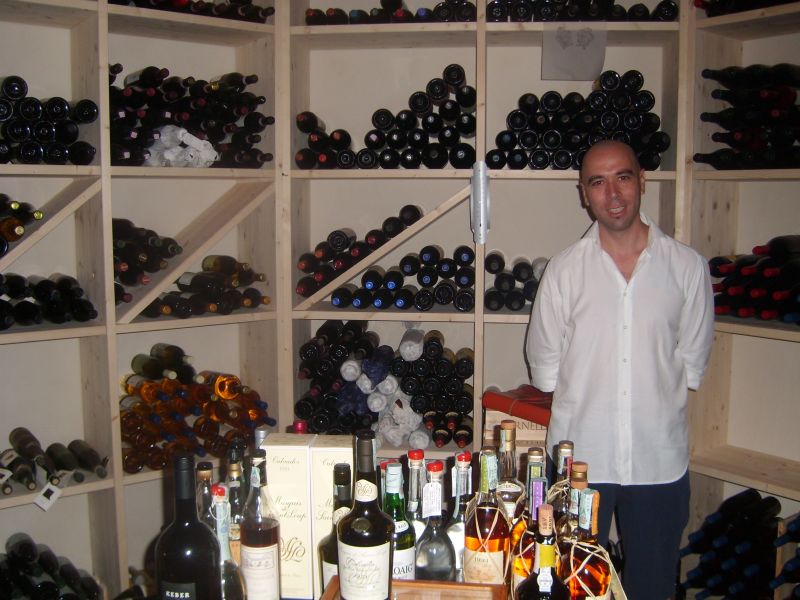
we are greeted "oenologist year," the
Mr. Casimiro Maule , company director and chairman of the consortium, the Valtellina. Born in Aldershot and graduated
Agrarian Institute of San Michele, for all of us is the "Mr Nino Negri, first for his involvement in this long-lived wine, but also for the passion and the forces che versa ogni giorno per lo sviluppo qualitativo sia dei suoi vini e sia per un consolidamento, attraverso il consorzio di tutela, di tutta la viticoltura valtellinese sul territorio nazionale e non solo.
Il Sig. Maule, per chi non lo conoscesse, è una persona di grande spessore, innamorato del suo lavoro e che nonostante l'esperienza acquisita, frutto delle sue numerose vendemmie, è sempre alla ricerca del suo vino "ideale", come da un famoso motto "il mio vino vino migliore? Quello che devo ancora fare!".
Iniziamo la nostra giornata parlando dei vigneti.
Enocentrico : "Prima di tutto, Sig. Maule è soddisfatto di come procede l'annata '07?"
Casimiro Maule: "If I had made this request last week, I would have said definitely yes.
But these days there were heavy rains that are now beginning to give me problems on some rotting bunches of white grapes and in some Nebbiolo grapes, especially those from clones giving a compact cluster in contrast to the sparse classic.
EC: "so how you behave accordingly?"
CM: "For the white grapes we should make a great work of sorting in the vineyard and the cellar and then we will still charge less aromatic grapes than last year. As for the red grapes are hoping for a good month of September.
EC: "We come now to the management of the vineyard. He wants to tell our readers, what is your philosophy?"
CM: "With regard to fertilizers, we use only organic ones, even when (indicated some screws) of magnesium and potassium deficiency as this.
The vineyards of the Valtellina is very unique in its kind, the difficulties of processing, preparing and managing the vineyard, where in some years, also we get to 1200 hours of labor per hectare per year (double the company
Conterno Fantino recently reviewed on our pages).
We operate the pruning to encourage the development of the ripening of grapes remaining on the plant. While harvests are done manually and the grapes brought to the valley with the help of helicopters. "
Fracia continue our visit in the vineyard, the undersigned along with the Gourmet Traveler, there are photographic evidence when it comes to difficulty and viticulture" heroic ", the that the name given to sub-Inferno, derives from the rough conditions to work these lands.


 Fracia some pictures of the vineyard. EC:
 " At this time the grapes arrive in the cellar, now what? What's happening? "
CM: " We speak mainly of the chiavennasca, since it represents almost all of our production. The grapes are checked on the sorting table. Those from sub-areas, the first to be harvested and sent to the so-called traditional wines are classic in steel tanks at controlled temperatures, we also vitrified cement tanks.
The grapes for the crus, are in roto-maceration, both in the development of horizontal and vertical ones.
There are a maximum of six days of maceration, but the grapes for the production of Sfursat that, since they are already rich because of withering, the debris can last for 15 days. "
EC: " classic question .. . what type of yeast used per innescare le fermentazioni?"
CM: "Fino ad oggi abbiamo utilizzato dei lieviti selezionati classici. Per contro, da quest'anno, inizieremo ad utilizzare, per alcuni vini, dei lieviti selezionati provenienti dai nostri ceppi autoctoni fatti dalla
Fondazione Fojanini ."
EC: "Avete mai fatto delle prove con fermentazioni spontanee?
CM: "Sì, ma i risultati sono stati più che deludenti, i vini ottenuti erano anonimi, magri e qualcuno presentava anche problemi di acetica."
 I rotomaceratori...
  ...e le vasche "classiche".
EC: "We speak now of wood, and what types? What source? What sizes?"
CM: "Start telling her that we have a few barrels, still use the original foundation of the year!"
EC: "Excuse me??"
CM: "I am of the barrels that have been built in here and now does not give anything. We use the more as containers for the classic wines."
 The striking barrel. CM:
 "Then use the barrels of 57 hl Slavonian oak Firm
Garbellotto Conegliano Veneto and French oak barrels. We also tried those of American origin, but the latter give way too much for one as sensitive as the Nebbiolo grape. "
EC: " currently consists of how many bottles your annual production?
CM: "of about 750,000 bottles."
well and now the taste!


photos
In a few moments of chat-tasting. But even before a question-answer-type "personal" ...
EC: "Even here in the Valtellina are the ones that arrived today are called Wine-Wine-maker or consultant (see the case Input by Barbara Tamburini and Vittorio Fiore to Sertoli Salis). You, Mr.. Maule, uses an outside consultant winemaker? "
CM: " We do not employ any consultant winemaker. With me working for two decades Dino Negri Lauro joined the young.
I do believe that there is variety as Chiavennasca going regularly followed, during fermentation, as it is more subject than others to treatment that, if borne out, would create serious problems of undesired fermentation problems and sharpness aromatic .
EC: "Mr. Maule, apart from the Nebbiolo grape varieties which are his favorites? "
CM: " I love and strongly Sauvignon Pinot Noir Grape difficult, often giving rise to wines rough and impersonal, but when they are large, produce wines that leave a mark! "
EC: " What are you, your perfect wine? "
CM: "I like wines like Dolcetto Sandrone for its delicacy, Sangiovese Pergolas of cake for her style, or that of Cepparello for his" philosophy "Piedmont (Paolo De Marchi, the producer is a native of northern Piedmont ed). "
EC: " And the aforementioned Pinot Noir? "
CM: " In Alto Adige Krafuss I like Alois Lageder. "
EC: " Most of the St. Urban? "
CM: "Let's say that I prefer ..."
EC: "There is a wine among those who had the opportunity to taste, that she wished it were produced from her?"
CM: "Yes Soldera '83!"
EC: "She is leading one of the most important of the Valtellina. If it had not arrived at the Nino Negri?"
CM: "I would have liked to land AR.PE.PE."
EC: "What do you like and what would improve by this company?"
CM: "I really like his style so traditional and so difficult to understand. The improvements would be only in times of aging."
EC: "Cioè?"
CM: "Troppo lunghi."
EC: "Un'ultima domanda, che valore hanno per lei, i termini territorio, tradizione, tipicità?"
CM: "In futuro avranno un peso decisivo importante. Con questo non intendo quelli derivanti dalle sottozone classiche, in quanto producono vini, le cui differenze non sono così marcate, ma da vigneti, tipo il nostro Fracia, che possono fare la differenza!"
Si parte!
Una doverosa precisazione.
La Batteria presentata da Casimiro Maule, in quel giorno hanno presentato delle difficoltà di "chiusura" aromatica (confermate da lui stesso).
Quindi my opinion may be restrictive for some of them. All in all this does not affect in any way, the quality of the wines from this prestigious wine cellar, which, I can safely say, be (collectively) the highest in Valtellina.
level in years which is the real power differential on the organoleptic qualities of the wines presented, except for the preventive and qualitative differences from the selections date manufacturing techniques, including drying. So I'll
sensory description of the wines, whether for a large number of wines to be tasted to be lighter reading the post.
 Terraces Retiche Cà di Sondrio Brione 2006
-type wine: white IGT.
-Grapes: Sauvignon, Chardonnay, and Manzoni Cross Chiavennasca (vinified in white).
grape-Origin: common and Teglio Tresivio.
-Alcohol content: 13.4%.
-wine: barrels with lees stirring.
-aging: barriques for 7 months.
-contained sulfites: 21 mg. / lt of free, 106 mg. / liter total.
-Retail price: 17.00 Euro.
EC rating: 15/20
(tasting lunch)
Product for the first time in 1986, Ca 'Brione is the name of a vineyard in Fracia quote. This Ca
Brione is a wine very interesting. If we go over the notes given by an aromatic wood, at this time, too pronounced, we find a rich nose and notes of a balance of "hard", almost like sour green apple and citrus, balanced with notes more sweet as the banana and tropical fruit, highlighted by an evident minerality.
expect volume in the mouth and fatness but a wine straight and narrow with a strong acidity and a finish of average length.
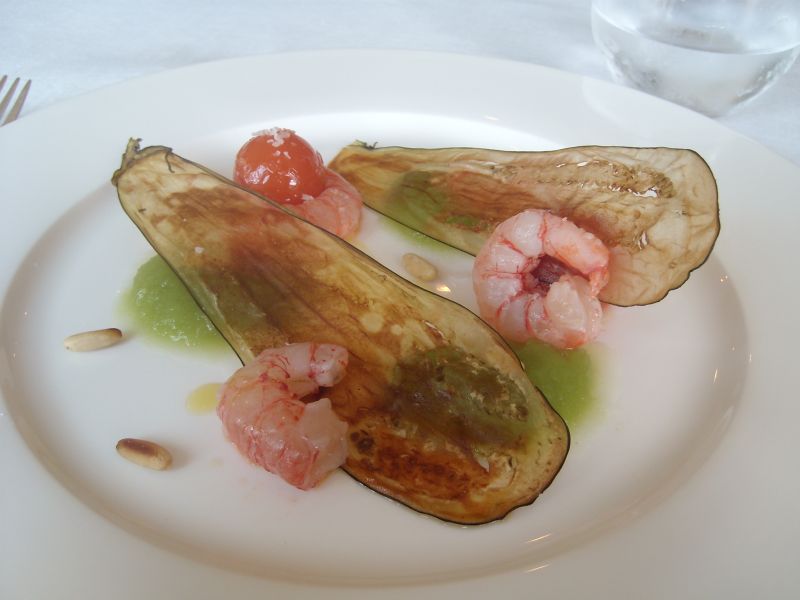
Match

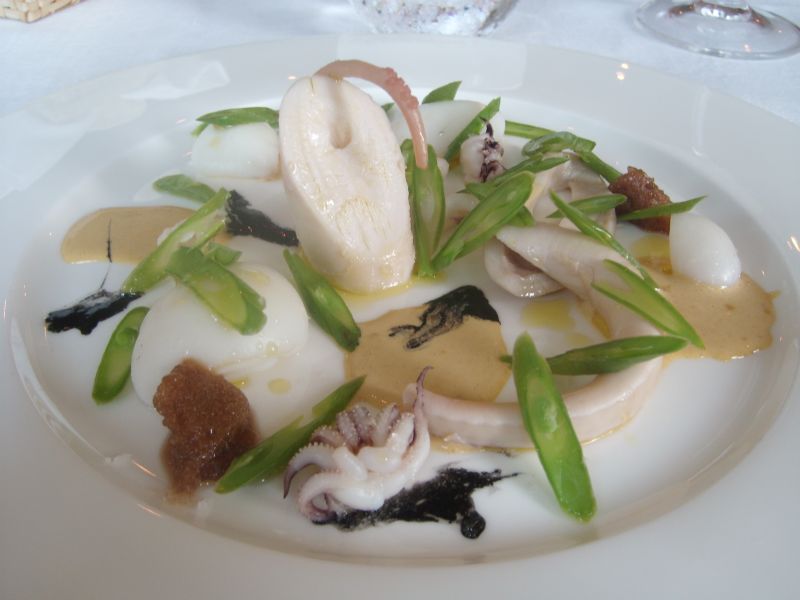
slice of roast monkfish with Parma ham dried powder, orange peel, onion, crispy potatoes, coffee sauce.
Restaurant Trussardi Alla Scala-Milano(MI)
Un piatto che presenta una sinfonia di sensazioni, dove la natura dell'equilibrio di esse trova come giusto compagno di viaggio, un vino delicato e deciso al tempo stesso, ma che trova nel suo equilibrio, la giusta contrapposizione a questa preparazione.
 VALTELLINA SUPERIORE SASSELLA 2004
-Tipologia vino: Rosso Docg
-Vitigni utilizzati: 95% Chiavennasca, 5% Pignola e Pinot Nero.
-Provenienza uve: sottozona Sassella.
-Gradazione alcolica: 12,5%.
-vinificazione: acciaio.
-affinamento: botti grandi.
-contenuto solfiti: 19 mg./lt di libera, 100 mg. / liter total.
-Retail price: 11.00 Euro
EC RATING: 14/20 The traditional Sassella was produced for the first time in 1945 and today the production is around 100,000 bottles. Compared to the previous
find a fresher nose and mouth in a coarse, dry tannin and acidity more evident.
 VALTELLINA TOP GRUMELLO 2003
 -type wine: Red-
DOCG Grapes: Chiavennasca 95%, 5% and Brugnola Fortana.
grape-Origin: sub Grumello.
-Alcohol content: 12.5%.
-wine: steel.
-Refinement: casks.
-contained sulfites: 26 mg. / lt of free, 90 mg. / liter total.
-Retail price: 11.00 Euro.
PROCEEDINGS EC: 14 (-) / 20
The traditional Grumello was produced for the first time in 1945 and today the production is around 80,000 bottles.
The minus sign in parentheses identifies a version similar to the previous sample, but with greater difficulty for a drink limit in support of the acidity than the pseudo-energy feeling.
 VALTELLINA ABOVE THE TENSE SASSELLO 2004
-type wine: Red-
DOCG Grapes: 100% Chiavennasca.
grape-Origin: sub Sassella, vineyards Mine, Longoni and Church Sassella.
-Alcohol content: 13.6%.
-wine: roto-fermenters.
-aging: 50% in the second and third passage barriques, 50% in casks of 80 hl.
-contained sulfites: 15 mg. / lt of free, 89 mg. / liter total.
-Retail price: 16.00 Euro .
PROCEEDINGS EC: 14.5 / 20
Today the production is around 80,000 bottles. The best vineyards, during the rule of the Three Leagues Grey Switzerland, between 1512 and 1797, were called "Tense" and were protected by "arbostrari", or the guardians of the screws.
With this wine we go to the next level.
Compared to "traditional", the "select" a qualitative difference are given by lower production per hectare, the harvest delayed, to a color more pronounced and less "orange" for the use of roto-maceration and the use of wood of small capacity.
The 2004 vintage was characterized by Valtellina in a winter-spring with a good climate and precipitation balance, difficulty due to rainfall in the spring night temperatures, with warm summer breeze and a beautiful month of September that led to the beginning harvests of 16 October.
 VALTELLINA TOP GRUMELLO 2004 RED STONE
 -type wine: Red-
DOCG Grapes: Chiavennasca 95%, 5% Rossola.
grape-Origin: sub Grumello, Sassorosso vineyards.
-Alcohol content: 13.4%.
-wine: roto-fermenters.
-aging: 50% in the second and third passage barriques, 50% in casks of 80 hl.
-contained sulfites: 20 mg. / lt of free, 105 mg. / liter total.
-Retail price: 15.00 Euro PROCEEDINGS EC: 14.5 (+) / 20
Today the production is around 30,000 bottles. It comes from vineyards in the Castel Grumello destroyed by the Grisons in 1526.
In this case, the positive sign is as a result cooler and a more minute and less dry tannin which facilitates the extension at the end, compared to "The Tense."
 Mazer Valtellina Superiore Inferno 2004
-type wine: Red-
DOCG Grapes: 100% Chiavennasca.
grape-Origin: sub-Inferno, vineyards Calvary Sottogironi, and Sopragironi Cà Rossa.
-Alcohol content: 13.85%.
-wine: roto-fermenters.
-aging: 60% in barriques, 40% in casks of 80 hl ..
-contained sulfites: 18 mg. / lt of free, 114 mg. / liter total.
-Retail price: 16.00 Euro PROCEEDINGS
EC: 15 to 15.5 / 20 The name comes from Valtellina dialect which means "good, beautiful, generous." Today is the most prestigious of Hell House Negri.
Here's an example of the difficulties, written in the preface to the tasting, significantly affect the final decision.
The final would have been 15 except that the Mazer '04 I had occasion to taste it on two other occasions the vote on bringing in more than half a point.
 VALTELLINA HIGHER "FRAC" 2003
-type wine: Red-
DOCG Grapes: 100% Chiavennasca. Provenance
-grapes: Fracia vineyard.
-Alcohol content: 14%.
-wine: roto-fermenters.
-aging: barriques for 15 months.
-contained sulfites: 16 mg. / lt of free, 95 mg. / liter total.
-Retail price: 25.00 Euro EC RATING: 16.5 / 20
the Frac Chiavennasca is made from grapes harvested in late harvest.
The 2003 vintage was characterized by a normal winter and early spring followed by hot (we'll remember for a lifetime!) Started in May and finished in late August that led to an early harvest of about three weeks normal.
In the case of the FRAC, the rain and warmer temperatures the month of September have "slowed" the phenolic ripening of the grapes, resulting in a wine with a nose features ripe fruit but not "cooked" and in the mouth with acidity present to support the 14% alcohol and tannin minutes and not bitter.
Match

Seared tuna, foie gras and caramelized figs
Restaurant Nicola Cavallaro-Milano (MI)
For the series "The hard part is my job" where we have a flat, the trend for sweet and savory tuna, the "sweetness" data from caramelized figs that balance the bitterness since the foie gras, ci regalano al palato sensazioni che possiamo trasgredire con un rosso di questa caratura, con caratteristiche di buona freschezza e discreta morbidezza.
 VALTELLINA SFURSAT TRADIZIONALE 2004
-Tipologia vino: Rosso Docg
-Vitigni utilizzati: 100% Chiavennasca.
-Provenienza uve: Inferno, Grumello e Fracia.
-Gradazione alcolica: 15,4%.
-Periodo di appassimento: 3 mesi e mezzo circa.
-vinificazione: roto-fermentini ma con macerazioni di 14 giorni.
-affinamento: 50% barriques, 50% in botti da 20 e 50 hl.
-contenuto solfiti: 12 mg./lt di libera, 98 mg./lt di totale.
-prezzo in enoteca: 32,00 Euro
PROCEEDINGS EC: 15.5 (?) / 20
effort is produced only in the finest vintages.
The Nebbiolo grape harvest for traditional Sfursat began in late September and early October, while the wilting lasted until January 12, 2005.
Again we have a wine to use the question in the trial, as are texture and character but at the moment is limited in the final phase of olfactory and in stretching.
To be reviewed later.
Here is a mini-vertical of 5 stars.
 VALTELLINA Sfursat 5 STARS 2003
-type wine: Rosso DOCG
-Grapes: 100% Chiavennasca.
grape-Origin: Inferno, Grumello and tailcoat.
-Alcohol content: 15.5%.
-drying period: 2 months and a half.
-wine: roto-fermentation maceration but with 14 days.
-aging: barriques for 16 months.
-contained sulfites: 14 mg. / lt of free, 114 mg. / liter total.
-Retail price: 45.00 Euro EC RATING: 17/20
Negri was in 1956, the first house Valtellina to use naturally dried grapes, and today is the 5-star top wine in this house, with only the best product, in limited quantities and only in great vintages. Also this
'03 is the result of a great year, but the early harvest of grapes and drying quickly changed the DNA of the traditional 5 stars, and so we have a wine of substance, of cloth, of character, if we see good shows a fresh nose, with hints of fine elegance, but the taste is limited agility to drink and tannin has a slight bitter note in closing.
VALTELLINA Sfursat 5 STARS 2002 Findings EC 18/20 HIGH CETO. 5 stars as the stars of the Most Ceto for this wine, which, he unlike many areas in Italy, in 2002 a year is favorable and gives us a vinod great balance, elegance e finezza. Tannino minuto e ben fuso con chiusura che favorisce un buon allungo finale.
Abbinamento

Maialino da latte con salsa gremolata e patate rosolate
Ristorante Ai Quattro Mori-Calcinate del Pesce (VA)
L'equilibrio del 5 stelle 2002, il buon tenore alcolico sostenuto da una buona freschezza ci regala sensazioni che si sposano con la delicatezza del maialino da latte e le note di tendenza dolce date dalla presenza della salsa e delle patate.
VALTELLINA SFURSAT 5 STELLE 2001 GIUDIZIO EC: 16/20 Le difficoltà also encountered in sampling of wine it makes us' to understand that today is a "day" difficult, as record locking problems still smell that even with a stop in the glass, the effort to express the aromatic and the cloth to assert their muscles. Nevertheless
can change something about the subtlety of expression, but not on the substance of quality wines in battery, which still have all the credentials to obtain 's
AC .

photos
In the house where for about three months remain for the bunches to dry. Note positive -A very interesting company, with high quality production for the production numbers. The constant search
-year improvements. The
-Pack represents a further positive note, the Nino Negri that differs at the level of label, the diversity of lines produced qualitative. Notes
negative The hard-reaching means of transport, the many hours spent working in the vineyard, viticulture heroic, vintages made from the helicopter significantly raise production costs (this is for each store of this area) with consequences that we find the final price of the wines.
Conclusions-We look forward to evaluating the first "experiment" with the yeast Fojanini. The long-
militancy and the work done with great professionalism and seriousness Winemakers Casimiro Maule, the considerable economic aid given by the IRP, the Nino Negri led to stand out in an area as difficult as the Valtellina and have a name that counts in the World and be present on the wine lists of some of the best restaurants, not just Italians.
(Cheeeese!)
 Altissimo Ceto!
 for Casimiro Maule and all the staff of the Nino Negri.
Cin! Cin! Ivano Antonini
alias enocentrico
ivano.antonini @ altissimoceto.it  Wine House Via Nino Negri Ghibellines, 3 Chiuro 23030 (SO) Tel: 0342/485211 Fax: 0342/482235
 e-mail:
Negroes @ giv.it http://www.ninonegri.it/ http://www.giv.it/